Before the Garden Club: How Shared Growing Took Root
Shared growing history traces how neighbors passed along seed and skill, and how local conditions shaped the gardens people tended together.
How did people learn to grow together before a garden club had a name or meeting room? Shared growing history is often pieced together from local records and family memories, not one universal origin story. A seed tucked into a pocket, a plant shared between households, or a patch tended under a local arrangement could each bring growers into contact.
Local Evidence
There is no single account that fits every village. Land access, household needs, custom, and climate differed, so claims about a community’s growing traditions need evidence from that place rather than a broad story applied everywhere.
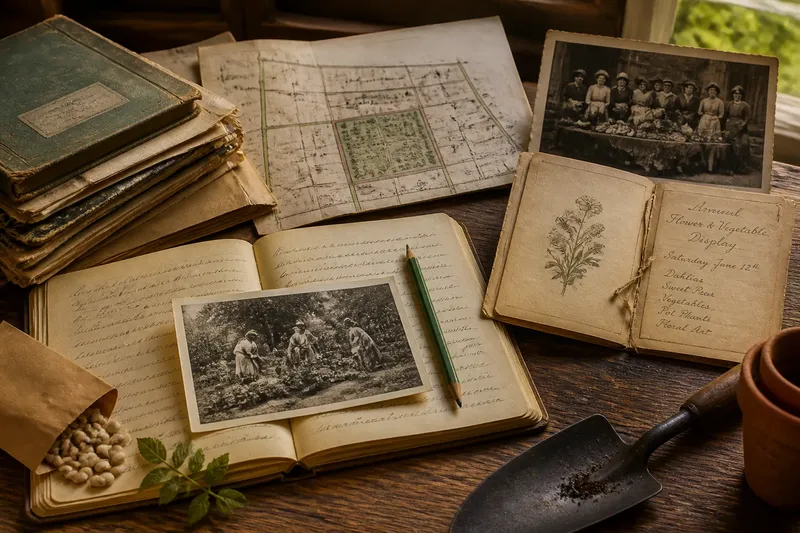
For a local history, useful starting points include parish or estate records, old maps, garden-club papers, photographs, and interviews with residents. Treat each source according to what it can establish: a map may show a plot’s location, while a recollection may preserve how someone remembers it being used. Neither alone necessarily explains who had permission to work there or how long an arrangement lasted.
It is not worth turning a suggestive place name into a complete history. A lane called Orchard Row may prompt a question, but it cannot by itself confirm who planted trees there or when.
Household Exchanges
Seed, cuttings, and growing advice can travel from one household to another without any formal organization. The exchange might happen during a visit or when neighbors are already working nearby. What moved along with a plant was often practical context: where it had grown, what care it needed, or what local conditions to watch.
Those details were specific to a garden. A method that suited a sunny, well-drained patch might not suit a shaded yard where water lingered. Local knowledge was useful partly because the recipient could compare the advice with the ground in front of them.
Land and Permission
Shared cultivation depended on access, and access did not mean the same thing everywhere. Some growers may have worked land under a shared local arrangement; others could have joined a task on privately held ground. The terms would have shaped who could use a plot, what could be planted, and who was responsible for its care.
For anyone tracing a particular garden, records of ownership or permission matter as much as stories about the planting. A shared path or gate may suggest regular use, but it does not establish that everyone could enter. Avoid treating “common ground” as a synonym for land without rules.
What Can Sources Tell Us?
Can a map prove a garden was shared?
A map can identify a marked plot or show how land was divided, but it may not record who worked it. Compare it with local records and accounts before drawing conclusions about access or use.
How should oral memories be used?
Record who is remembering what, and distinguish a person’s own experience from a story heard from someone else. Look for independent records or other accounts that can clarify dates and details.
What does a garden-club record establish?
Minutes, programs, or membership papers can document the activities of that organization during the period they cover. They do not necessarily describe earlier informal growing or represent every gardener in the village.
How can uncertain details be written?
Use careful wording such as “the map marks a plot” or “a resident recalled working there,” rather than presenting an inference as settled fact. State what remains unknown so readers can see where the evidence ends.
A Source Check
- Check whether a map marks a garden; if it does, use it to locate the plot, then seek another source for how people used it; if it does not, do not claim the map documents a garden.
- Check whether a record names an owner or tenant; if it does, describe that documented relationship, then verify any claim about shared access separately; if it does not, leave ownership unresolved.
- Check whether club papers give dates and activities; if they do, limit the account to those recorded events; if they do not, avoid assigning the club a specific role or period.
- Check whether an interviewee speaks from personal memory; if so, attribute the recollection and compare it with other evidence; if not, identify it as a story they heard.
- Check whether two sources refer to the same plot; if their locations or names agree, explain the match and its limits; if they conflict, present the discrepancy instead of choosing silently.
- Check whether a source describes permission or merely physical access; if it records permission, state its terms as written; if it only shows a path or gate, do not infer unrestricted rights.
Imagine a researcher has a map marking a garden, a club program naming a plant display, and a resident’s memory of helping there as a child. The researcher records the map’s location, uses the program to describe the club event, and attributes the recollection without turning it into proof of who owned the land. The resulting account can connect the sources while leaving access arrangements unresolved.
Careful Local History
Before the garden club, shared growing could take forms that left few formal records. That makes careful distinctions useful: an exchange remembered by one household is not the same evidence as a documented club meeting, and neither automatically explains a whole village’s practice.
Shared growing history becomes more informative when each claim stays close to its source. The next useful clue may be a name in an old program, a boundary on a map, or a resident who can explain where a remembered path led.